3-Day Seoul Itinerary for First-Timers
Facts checked: 2026-07-197 min read
By Korea Visit Guide Editorial · Published · Updated
3-Day Seoul Itinerary for First-Timers
Contains affiliate links
Stay connected in Korea
Get a Korea travel eSIM before you land — data works the moment you arrive, no SIM swap.
Contains affiliate links
Three days is enough to see Seoul's biggest highlights without rushing every hour. This plan groups sights by neighborhood so you're not crisscrossing the city, and it assumes you're using the subway with a T-money card. If you haven't sorted out transit or a SIM yet, do that first — see our guides on getting a Korea eSIM and using the Seoul subway.
This itinerary assumes you're already in Seoul. If you're still working out how to get from the airport, check Incheon Airport to Seoul or Gimpo Airport to Seoul first.
Day 1: Palaces, Hanok, and Traditional Seoul
Start in Jongno, the historic core of the city.
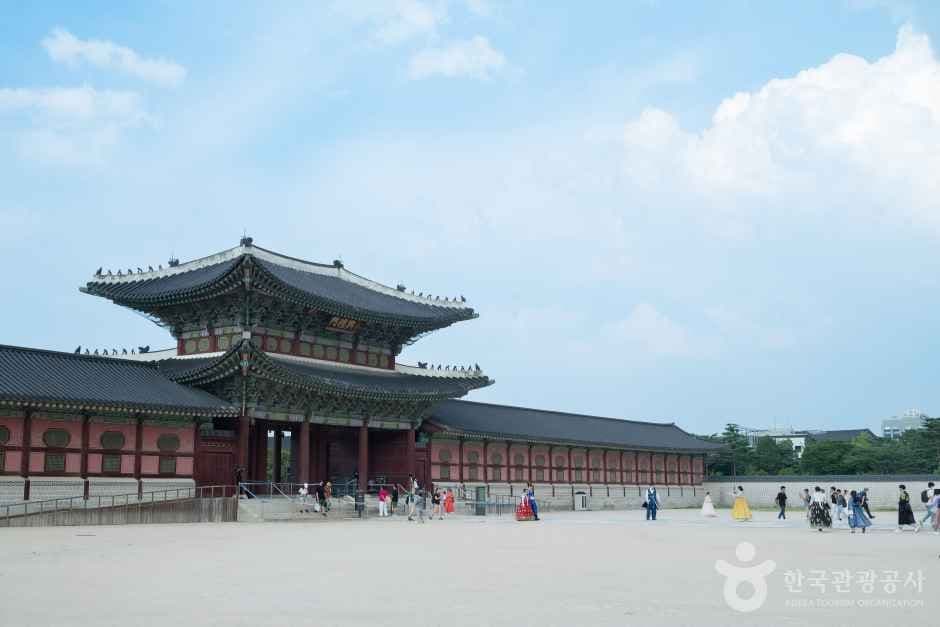
- Gyeongbokgung Palace (경복궁): Arrive by 9:30am to beat tour groups. Entry is around ₩3,000, or free if you wear a hanbok (rentable nearby for ₩15,000-25,000/day). Catch the Royal Guard Changing Ceremony if the timing lines up — check the official site for the schedule, as it varies seasonally. Nearest stop: Gyeongbokgung Station (Line 3), Exit 5.
- Bukchon Hanok Village (북촌한옥마을): A 15-minute walk from the palace. This is a residential area with hanok houses on hillside streets — it's a photo stop, not a museum, so keep noise down; locals do live there.
- Insadong (인사동): Lunch and tea house browsing. Try a traditional lunch (₩12,000-18,000) or duck into a tea house for a break. This area overlaps with our dedicated Jongno and Insadong guide if you want more detail on tea houses and galleries.
- Evening: Head to Myeongdong (명동) for dinner and street food. It's touristy but convenient, with night markets running until around 11pm. For a fuller breakdown of what to eat and skip there, see the Myeongdong Travel Guide.
Where to sleep for Day 1 convenience: staying in Myeongdong or nearby puts you within a short subway ride of everything above. Our Myeongdong hotel guide covers the best blocks.
Day 2: Shopping, Street Food, and Nightlife
This day covers two very different neighborhoods: Myeongdong in the morning, Hongdae at night.
- Morning: If you didn't finish exploring Myeongdong the night before, use the morning for duty-free shopping and skincare stores before crowds build. Most shops open around 10am-11am.
- Afternoon: Take Line 2 to Hongik University Station (홍대입구역) — about 25-30 minutes from Myeongdong. Hongdae (홍대) is built for wandering: street performers, indie shops, and a young crowd. Grab lunch at one of the neighborhood's casual Korean or fusion spots (₩10,000-15,000).
- Evening: Hongdae's nightlife starts late and runs later. Expect cover-charge clubs, hongdae playgrounds with buskers, and karaoke (noraebang) rooms open past midnight. If nightlife isn't your thing, the area still works well for dinner and browsing.
For a deeper dive into what to do, eat, and where the nightlife clusters, see the Hongdae Travel Guide. If you'd rather base yourself here overnight, check Where to Stay in Hongdae.
Day 3: Modern Seoul — Gangnam and Seongsu
Your last day shows the contrast to Day 1's traditional sights.
- Morning: Take the subway to Gangnam (강남), Line 2 or the Shinbundang Line depending on where you're starting. Walk Garosu-gil (가로수길) for boutique shopping and cafés, or visit COEX Mall and the Starfield Library if you want an indoor option (both free to browse).
- Lunch: Gangnam has everything from cheap gimbap counters to higher-end Korean BBQ (₩15,000-30,000 per person for BBQ).
- Afternoon: Head to Seongsu (성수), one stop past Gangnam-adjacent areas on Line 2 (roughly 20-25 minutes from Gangnam Station). This former industrial district is now full of converted warehouse cafés and pop-up stores from Korean and international brands. It's a good contrast to the palace visit on Day 1 — same city, completely different era.
- Evening: Dinner back in Gangnam or Seongsu depending on where you're staying, then an early night before departure prep.
For more on either area, see the Gangnam Travel Guide and Seongsu Travel Guide. If you're deciding where to base yourself for this side of the trip, check Where to Stay in Gangnam.
Suggested Itinerary at a Glance
| Day | Morning | Afternoon | Evening |
|---|---|---|---|
| 1 | Gyeongbokgung Palace | Bukchon Hanok Village, Insadong | Myeongdong street food |
| 2 | Myeongdong shopping | Hongdae wandering | Hongdae nightlife |
| 3 | Gangnam (Garosu-gil / COEX) | Seongsu cafés and pop-ups | Dinner + wind down |
Choosing a Base for 3 Days
Where you sleep affects how much transit time you lose. Myeongdong is the most central for this specific 3-day route since it sits close to both Jongno and the subway lines toward Hongdae and Gangnam. If you'd rather compare all the major areas before booking, our best areas to stay in Seoul guide breaks down the trade-offs.
Practical Notes
- Budget: Plan roughly ₩60,000-90,000 per person per day for food, entry fees, and local transit, excluding accommodation and shopping.
- Pace: This itinerary is full but doable on foot with subway connections. If you prefer a slower trip or want to add Busan, look at the 5-Day Seoul Itinerary or 7-Day South Korea Itinerary.
- Payments: Most places take cards, but keep some cash for smaller street food stalls and markets. See how to pay in Korea as a tourist for specifics.
- Navigation: Google Maps has limited transit data in Korea. Use Naver Map instead — our Naver Map guide walks through the basics.
Final Tips
Book any popular restaurant ahead where you can, especially for dinner on Day 2 or 3 — see how to book restaurants in Korea for the apps locals actually use. And if you're shopping at all on this trip, keep your receipts; foreign tourists can claim VAT back on qualifying purchases, detailed in our Korea tax refund guide.
3-Day Seoul Itinerary for First-Timers
Contains affiliate links
Quick answers
Is 3 days enough to see Seoul?
Three days covers the main highlights — one major palace, a traditional neighborhood, a shopping district, and a nightlife area — but you'll be moving at a steady pace. If you want day trips outside the city or a slower schedule, plan for 5 days instead.
How much does a 3-day Seoul itinerary cost?
Budget roughly ₩60,000-90,000 per person per day for food, attraction entry, and local transit, not including hotels. Palace entry is typically around ₩3,000, and meals range from ₩10,000 for casual Korean food to ₩30,000 for barbecue.
What's the best area to stay for a 3-day Seoul trip?
Myeongdong works well as a base since it's central to Jongno's palaces, Hongdae, and Gangnam via subway. Hongdae or Gangnam are also reasonable if nightlife or shopping matters more to you than palace access.
Do I need a T-money card for this itinerary?
Yes. All three days rely on the subway between neighborhoods, and a T-money card makes fares faster and slightly cheaper than single tickets. Load it at any convenience store or subway station kiosk before Day 1.
Itineraries
Yeoju Premium Outlets Shuttle Bus: Seoul Day Trip Guide
How to get the Yeoju Premium Outlets shuttle bus from Seoul, grab the foreigner discount coupon, and store luggage before shopping. Routes, times, prices.
Facts checked: 2026-10-20 · 7 min read
Jeonju Hanok Village Weekend Trip: KTX, Food & Stay
Plan a Jeonju Hanok Village weekend trip from Seoul: KTX access, must-eat bibimbap and hanok cafes, and where to stay near the village.
Facts checked: 2026-09-30 · 7 min read
Seoraksan Day Trip from Seoul: Bus, Tours & Cable Car Timing
How to visit Seoraksan National Park from Seoul in a day: express bus times, guided tour options, cable car tickets, and a realistic hour-by-hour plan.
Facts checked: 2026-09-14 · 7 min read
Latest guides
How to Book K-League Football Tickets in Korea
How to find K-League match schedules and buy football tickets in Korea: official sites, stadium box offices, prices, and English-language support.
Facts checked: 2026-10-18 · 5 min read
Hiking Bukhansan as a Tourist: Easiest Routes & Subway Access
Hike Bukhansan as a first-timer: the easiest beginner trails, the gear to pack, and which subway station gets you to each trailhead.
Facts checked: 2026-10-15 · 6 min read
Where to Stay in Jeju: Jeju City vs Seogwipo vs Aewol
Compare Jeju City, Seogwipo, and Aewol to pick the right home base for your first Jeju trip based on attractions, nightlife, and drive times.
Facts checked: 2026-10-13 · 6 min read
Is Airbnb Legal in Seoul? Hotel vs Guesthouse Rules
Is Airbnb legal in Seoul? Learn which hotels, guesthouses and homestays tourists can legally book, and how to verify a listing before paying.
Facts checked: 2026-10-11 · 6 min read