Ikseon-dong Hanok Cafes: Where to Go and What to Expect
Facts checked: 2026-08-037 min read
By Korea Visit Guide Editorial · Published · Updated
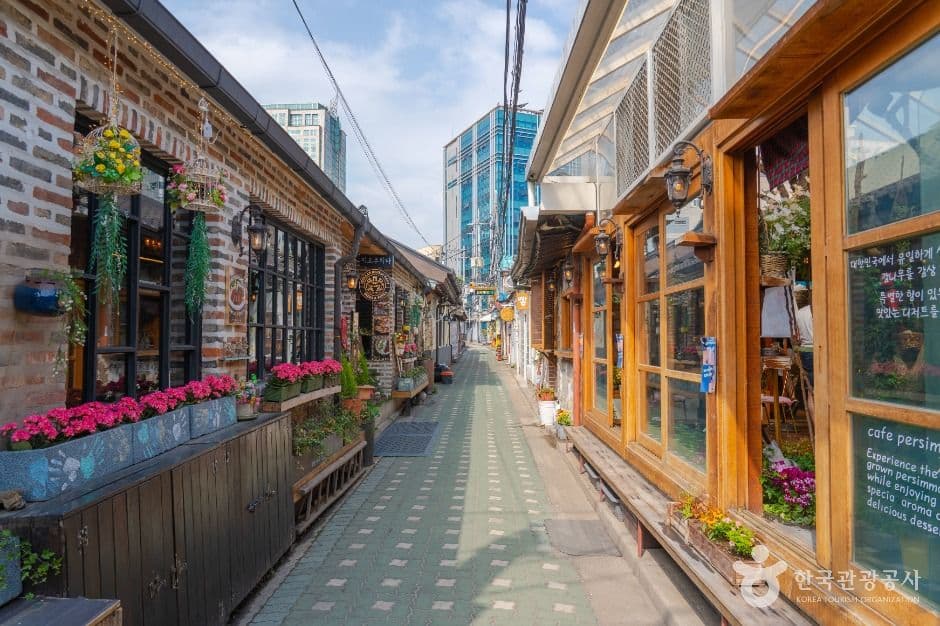
Ikseon-dong Hanok Cafes: Where to Go and What to Expect
Contains affiliate links
Stay connected in Korea
Get a Korea travel eSIM before you land — data works the moment you arrive, no SIM swap.
Contains affiliate links
What Is Ikseon-dong, Exactly?
Ikseon-dong (익선동) is a tight grid of alleyways in Jongno-gu built up with hanok (traditional single-story wooden houses) in the 1920s-30s, making it one of Seoul's oldest surviving hanok clusters. A 2010s redevelopment push was stalled by preservation pressure, and instead of being torn down, the low-slung houses were converted one by one into cafes, dessert bars, small-batch bakeries, fusion restaurants, bars, and craft shops. The result is a district that looks historic from the outside but functions almost entirely as a commercial cafe-and-bar zone today.
That distinction matters for planning: this is not a village you walk through to admire architecture. It's a place you go to sit inside a 90-year-old house drinking coffee, hunting dessert, or waiting in line for a themed bar — closer in spirit to Seongsu's warehouse-cafe scene than to a heritage walk.
Getting There and the Maze Layout
The main access point is Jongno 3-ga Station (종로3가역) on Lines 1, 3, and 5 — take Exit 6, which puts you almost directly at the edge of the alley cluster; Exit 4 also works if Exit 6 is under construction or crowded. The district sits roughly between Supyo-ro (수표로) and Donhwamun-ro, a short walk from Tapgol Park and Jongmyo Shrine.
There is no single "main street" — Ikseon-dong is a warren of alleys narrow enough that two people can barely pass, with low hanok doorways (mind your head) and no consistent block numbering. Phone signal and GPS pins can lag inside the tightest lanes, so it helps to have data ready before you start wandering; if you haven't sorted a SIM yet, grabbing a Korea eSIM before you land makes it easier to keep Naver Map open while you weave between alleys. For general navigation logic in an app built for Korean addresses rather than Western ones, see our guide on how to use Naver Map in Korea as a foreigner.
Don't plan a fixed itinerary. The fun of Ikseon-dong is ducking down whichever alley looks interesting, backtracking when it dead-ends, and letting queues (or the smell of fresh bread) decide your next stop.
Ikseon-dong vs. Bukchon vs. Insadong
Foreigners often try to fit all three into one afternoon, but they serve different purposes. Here's the honest comparison:
| Ikseon-dong | Bukchon | Insadong | |
|---|---|---|---|
| What it actually is | Converted hanok turned cafes, bars, boutiques | Still-residential hanok on hillside lanes | Traditional tea houses, galleries, antique/souvenir shops |
| Vibe | Trendy, dense, young local crowd | Quiet, photogenic, residents live there | Touristy, cultural, souvenir-shopping |
| Main activity | Cafe/dessert/bar hopping | Walking, photos of rooflines, hanbok shots | Tea houses, art, gift shopping |
| Crowd level | Very high, especially weekend evenings | Moderate, quieter after early evening | High but spread over a wider street |
| Noise/etiquette | Loud is fine, it's commercial | Keep quiet — people actually live here | Normal tourist-street etiquette |
| Best for | Dessert cafes, novelty drinks, night bars | Architecture photos, quiet strolls | Tea culture, calligraphy, gifts |
For a deeper look at Bukchon's photo rules and residential lanes, see our Bukchon Hanok Village guide. For the older palace-and-teahouse side of the district, the Jongno and Insadong travel guide covers that ground. This guide sticks to Ikseon-dong's cafe-and-bar alleys specifically.
Where to Start: A Cafe-Hopping Route
A workable loop: enter from Exit 6, work through the alleys between Supyo-ro 28-gil and Donhwamun-ro 11-gil (where much of the density sits), then exit toward Seosulla-gil for a quieter cooldown walk (more below). Expect the whole loop, with stops, to take 2-4 hours.
Categories to look for as you wander:
- Dessert and coffee hanoks — small houses converted into single-room cafes serving bingsu, injeolmi toast, and specialty coffee; seating is often just a few tables, so queues form fast on weekends.
- Fusion-hanok restaurants — Western dishes served inside a hanok is a running theme; pasta spots along Seosulla-gil (like the well-reviewed 서양면옥) and Korean-fusion tasting spots such as 익선잡방 and 익선요록 draw long waits and often require a same-day or advance Naver reservation.
- Bars and pojangmacha-style spots — the alleys shift from cafe crowd to drinking crowd after dark; skewer-and-oden bars like 낙원장 X 하나마토 are part of that evening scene.
- Pet-friendly spots — Ikseon-dong has a handful of dog-friendly cafes and restaurants (무위낙원 is one example), useful if you're traveling with a pet-owning friend or just want to see Seoul's pet-cafe culture.
- Craft and photo experiences — small workshops tucked into the alleys let you make keyrings or try a quick caricature/tarot session; keyring-making spots like 와펜익선 are budget-friendly (roughly ₩10,000-20,000 range, confirm on-site) and popular with couples and friend groups.
- Street snacks — salt bread (소금빵) stalls and small bakeries have become one of the alley's signature grab-and-go snacks; it's become enough of a fixture that even visiting international film stars have been photographed picking some up on Ikseon-dong walks.
Crowds, Costs, and Practical Tips
- When to go: weekday late morning to early afternoon (roughly 11am-2pm) is noticeably calmer. Weekend evenings and holidays get shoulder-to-shoulder in the narrowest alleys, and popular cafes can mean a 20-40 minute wait with no seating queue system.
- Reservations: the sit-down fusion restaurants (pasta houses, tasting-menu spots) increasingly take bookings through Naver Reservation or Catch Table rather than walk-ins only. If a place looks packed, check its Naver Map listing for a reservation link before you queue. Our guide on how to book restaurants in Korea walks through the apps.
- Rough costs: a coffee or dessert in a hanok cafe generally runs about ₩7,000-15,000; fusion restaurant mains are closer to ₩15,000-35,000. These are ballparks — menus and prices change often, so treat posted board prices as current.
- Payment: most spots take cards, but a few small bars/stalls are cash- or app-transfer-only late at night. See how to pay in Korea as a tourist if you want a backup plan.
- Parking: if you're driving (not recommended given the alley width), nearby paid lots exist rather than street parking; public transit is far simpler here.
- Where to stay nearby: Ikseon-dong sits close to Jongno's palace cluster, so it pairs naturally with a night or two in central Seoul rather than a dedicated hotel zone of its own — browse Seoul hotel options if you want to base yourself within walking distance of both the palaces and the hanok alleys.
Extending the Walk: Seosulla-gil
If the crowds get to be too much, walk east toward Seosulla-gil (서순라길), the quieter path running along Jongmyo Shrine's stone wall. It has a similar hanok-cafe feel but with more breathing room, fewer queues, and a handful of the fusion restaurants mentioned above. It's a natural way to end a loop through Ikseon-dong without doubling back through the busiest alleys.
If you're building a longer day around this pocket of Jongno, our 5-Day Seoul itinerary and 3-Day Seoul itinerary for first-timers both slot a Jongno/hanok-district afternoon in near the palaces — Ikseon-dong is an easy add-on to either plan.
Bottom Line
Go to Ikseon-dong for cafe-and-dessert hopping and a night-bar atmosphere inside century-old houses — not for quiet architecture photos (that's Bukchon) or tea-house culture and antique shopping (that's Insadong). Arrive on a weekday morning if you want breathing room, have data ready for the alley maze, and expect to wait for the most-hyped spots.
Ikseon-dong Hanok Cafes: Where to Go and What to Expect
Contains affiliate links
Quick answers
Where is Ikseon-dong and what's the nearest subway station?
Ikseon-dong is in Jongno-gu, central Seoul. The nearest station is Jongno 3-ga (Lines 1, 3, 5) — take Exit 6 for the most direct access into the hanok alley cluster, or Exit 4 as a backup.
Is Ikseon-dong worth visiting if I've already seen Bukchon or Insadong?
Yes — they serve different purposes. Bukchon is residential and photo-focused, Insadong is tea houses and antique shopping, while Ikseon-dong is a dense cafe, dessert, and bar district inside converted hanok. Visiting all three shows very different sides of hanok life.
Do I need reservations for Ikseon-dong restaurants and cafes?
Most small cafes are walk-in only but expect queues on weekends. Popular fusion restaurants and tasting-menu spots increasingly take bookings via Naver Reservation, so check a place's Naver Map listing before you commit to waiting in line.
When is the best time to visit to avoid crowds?
Weekday late morning to early afternoon, roughly 11am-2pm, is noticeably quieter. Weekend evenings and public holidays pack the narrowest alleys shoulder-to-shoulder, with waits of 20-40 minutes at the most popular cafes.
Neighborhoods
Itaewon Guide: Restaurants, Nightlife and Halal Food
Itaewon travel guide for foreigners: best restaurants, halal food near Seoul Central Mosque, bars, clubs, and safety tips for Seoul's most diverse district.
Facts checked: 2026-08-04 · 7 min read
Bukchon Hanok Village Guide: Photo Spots, Etiquette & Cafes
Bukchon Hanok Village guide: exact photo alleys, the tourist curfew and noise rules you must follow, and the best cafes nearby to pair with your visit.
Facts checked: 2026-08-03 · 7 min read
Lotte World Aquarium Jamsil: 1.5-2 Hours, Tower & Sky
Lotte World Aquarium takes 1.5 to 2 hours to see comfortably — it's on B1 of Lotte World Mall, steps from Lotte World Tower, Seoul Sky & Seokchon Lake.
Facts checked: 2026-09-14 · 6 min read
Latest guides
Catch Table Deposit & Cancellation Policy: Will You Get Refunded?
Catch Table deposit and cancellation rules explained: how much restaurants can hold, the cancellation deadline, and how refunds post to foreign cards.
Facts checked: 2026-09-18 · 6 min read
Semi-Permanent Lip Blush in Korea: Cost, Sessions, Healing
Semi-permanent lip blush in Korea: price ranges by studio type, how many sessions you need, and the day-by-day healing timeline.
Facts checked: 2026-09-17 · 7 min read
E-Scooters & Bike-Share in Korea: Riding Without a Korean ID
Can tourists use Ttareungyi, GCOO or Kakao T Bike without a Korean ID or license? Here's what actually verifies, and where e-scooters legally require one.
Facts checked: 2026-09-16 · 6 min read
Free & Discounted Jeju Flights for Foreign Tourists
How Jeju flight discount campaigns for foreign tourists actually work, who qualifies, and how to book the cheapest legitimate seat as an independent traveler.
Facts checked: 2026-09-15 · 6 min read