Winter in Korea: Weather, What to Pack & Best Things to Do
Facts checked: 2026-09-098 min read
By Korea Visit Guide Editorial · Published · Updated
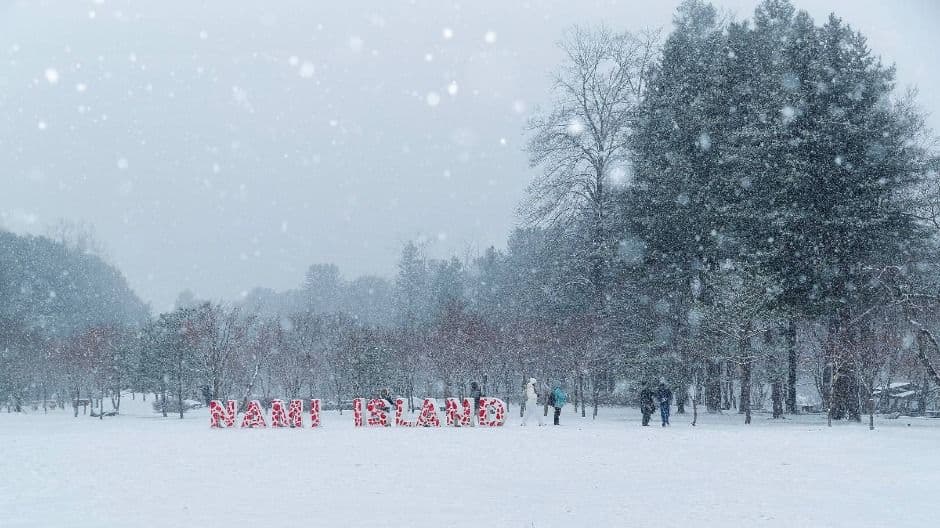
Winter in Korea: Weather, What to Pack & Best Things to Do
Contains affiliate links
What Is Winter in Korea Like?
Korea during winter — and Korea in winter more generally — is cold, dry, and clear-skied, running roughly from December through February, with the coldest stretch typically mid-to-late January. Seoul sees average highs around 1-6°C (34-43°F) and lows around -8 to -3°C (18-27°F), with occasional cold snaps pushing well below -10°C for a few days at a time. It's a continental winter, not a coastal one — expect dry air, biting wind chill, and intermittent light-to-moderate snow rather than constant heavy accumulation. If you're picturing what Korea in the winter actually feels like day to day, think brilliant blue skies, sharp wind on open plazas, aggressively heated interiors, and snow that dusts the palaces without ever really shutting the city down. If you're wondering whether Korean winters are "extreme," the honest answer is: colder than most of Western Europe or the US South and mid-Atlantic, milder than the Upper Midwest or Canada, and very manageable with the right layers.
In Korean, winter is 겨울 (gyeoul) — you'll see and hear the word on weather apps, festival banners, and seasonal café menus from December onward.
Quick answers if you're short on time:
- Korea's winter months: December, January, and February by the calendar — three months, though "feels like winter" stretches longer (see below)
- When it happens: December-February by the calendar; "feels like winter" mid-November to mid-March
- How cold: Seoul roughly -8°C to 6°C (18-43°F) on average, colder during cold snaps
- Does it snow: Yes, regularly, but usually light-to-moderate rather than blizzard-level
- Clocks: No daylight saving, ever — Korea stays at UTC+9 all year, in every season
- Worth visiting: Yes for most travelers — thinner crowds, ice festivals, skiing, and dramatic snow-dusted palaces, in exchange for cold and short days
The rest of this guide covers exactly when winter falls, how cold it actually gets month by month and region by region, whether Korea winter travel is worth it, what to pack, and the best things to do while you're there.
When Is Winter in Korea? Season Dates, Months & Time Zone
Meteorological winter in Korea is December, January, and February. Locals often feel it start earlier, in mid-to-late November, and linger into early-to-mid March, especially in the mornings and evenings — so pack layers if you're traveling on either edge of that window.
How Many Months Is Winter in Korea? (Korea's Winter Season, Defined)
By the standard calendar, Korea's winter season is three months — December, January, and February — the same definition used by most weather services and travel calendars. In practice, the "feels like winter" window runs longer: cold, dry weather often arrives in mid-to-late November and doesn't fully let go until early-to-mid March, so the real answer to "how many winter months does Korea have" depends on whether you're asking meteorologically (three) or experientially (closer to four or five, counting the shoulder weeks).
Is There a Winter Time Change in Korea? (Daylight Saving & Time Zone)
No. Korea Standard Time (KST) is fixed at UTC+9 all year, and Korea has not observed daylight saving time since 1988. So if you're asking about "Korea winter time" in the clock sense, the answer is simple: it's the same time zone in winter as in every other season. If the time difference between Korea and your home country seems to shift in winter, that's because your own country moved its clocks back for daylight saving — not because Korea's time changed.
A few more concrete answers to the season-timing questions people actually ask:
- What is the coldest month? January, by a clear margin — see the temperature table below.
- Are days shorter in winter? Yes, noticeably. Around the December solstice, Seoul gets roughly 9.5 hours of daylight (sunrise around 7:30-7:45am, sunset around 5:15-5:30pm), lengthening to closer to 11 hours by late February. Exact sunrise/sunset times shift by a few minutes daily, so check a weather app the week before you travel rather than relying on a fixed number.
- Does Lunar New Year (Seollal, 설날) fall in winter? Usually yes — it's a lunar holiday that lands in late January or February and shifts every year, so check the current year's calendar before booking. As an example of how much it moves: Seollal falls on February 17, 2026 (public holiday roughly February 16-18), and it drifts to a different late-January or February date in the years after that — never assume last year's dates still apply. Expect roughly three days of closures at many smaller restaurants and shops, and heavily booked trains/buses as Koreans travel home; palaces and major attractions typically stay open, and some even offer free or discounted entry on the holiday itself.
Korea Winter Weather: How Cold Does It Get?
Seoul's cold snaps come from a polar air mass known locally as the "Siberian high," which can drop overnight lows below -12°C (10°F) for a few days at a stretch, most often in mid-to-late January. Wind chill makes it feel colder than the thermometer suggests, especially near the Han River or in open plaza areas with little wind break.
Snow is common in Seoul but usually light and doesn't sit for long in the city core, since major streets are cleared quickly — side streets, stairs, and subway exits are a different story and stay icy longer. Mountain regions (Seoraksan, parts of Gangwon-do) see the heaviest and most reliable snowfall, while Busan and the south coast are milder in the day but still drop to freezing overnight. Air quality can also dip in winter due to temperature inversions that trap pollution over the city, so it's worth checking the AQI on Naver or Google before a heavy outdoor day.
| Month | Seoul Avg High / Low | Daylight (approx.) | Notes |
|---|---|---|---|
| December | 6°C / -3°C (43°F / 27°F) | ~9.5 hrs (sunrise ~7:25am, sunset ~5:15pm) | Mild start to the season, first snow possible, holiday lights around Myeongdong/Gwanghwamun |
| January | 1°C / -8°C (34°F / 18°F) | ~9.5-10 hrs, the shortest days of the year | Coldest month, occasional cold snaps below -12°C; Seollal sometimes falls late in the month |
| February | 4°C / -5°C (39°F / 23°F) | ~10.5-11 hrs, days visibly lengthening | Still cold but milder than January; Seollal often falls here |
These are long-run climate averages, not a forecast — any given trip can run a few degrees warmer or colder than the table above, so check a real forecast for your travel dates rather than packing off averages alone.
Winter Weather by Region: Seoul vs Busan vs Jeju vs Gangwon
Korea isn't uniformly cold in winter — where you go changes the experience a lot:
| Region | Typical Winter Feel | Snow | Good For |
|---|---|---|---|
| Seoul & central inland | Cold, dry, occasional Siberian-high cold snaps | Regular, light-to-moderate | Palaces, city sightseeing, ice rinks |
| Busan & south coast | Noticeably milder in the day, still freezing overnight | Rare, usually light | A "warmer Korea" break, seafood, beaches out of season |
| Jeju Island | Milder and windier than the mainland, coastal chill | Occasional, sometimes heavier at higher elevation (Hallasan) | A gentler winter trip, hiking on clearer days |
| Gangwon-do (Pyeongchang, Seoraksan) | The coldest, snowiest region in Korea | Heaviest and most reliable | Skiing, snowboarding, snow scenery |
If you only have time for Seoul, don't worry — you'll still get real winter weather and snow. If you want the deepest snow and coldest temperatures, head toward Gangwon-do; if you want a milder detour, Busan or Jeju take the edge off without leaving winter entirely.
Winter Words Worth Knowing
A few Korean words show up constantly on weather apps, signs, and menus once cold weather sets in — knowing them makes navigating winter noticeably easier:
| Korean | Romanization | Meaning |
|---|---|---|
| 겨울 | gyeoul | Winter |
| 눈 | nun | Snow |
| 춥다 | chupda | Cold (to be cold) |
| 한파 | hanpa | Cold snap / cold wave |
| 핫팩 | hotpaek | Hand warmer |
| 붕어빵 | bungeoppang | Fish-shaped winter pastry |
| 얼음낚시 | eoreum-nakssi | Ice fishing |
Is Korea Winter Travel Worth It? Pros, Cons & Who It's Best For
Short answer: for most travelers, yes. Winter is one of the more underrated times for Korea winter travel, but it does trade off warmth and long daylight for lower crowds and lower costs outside the Christmas/New Year and Seollal peaks.
Reasons to visit Korea in winter:
- Noticeably shorter lines at palaces, museums, and major attractions compared to spring cherry blossom season or fall foliage season
- A full calendar of season-specific activities: ice festivals, skiing within day-trip distance of Seoul, and outdoor ice rinks
- Dramatic snow scenery at palaces, temples, and mountains that you simply don't get the rest of the year
- Hot street food (hotteok, roasted chestnuts, mulled drinks) that tastes better in the cold
- Generally lower flight and hotel prices outside the Christmas/New Year and Seollal windows
Reasons it might not be the right season for you:
- Genuinely cold temperatures, wind chill, and the need for serious layering
- Short daylight hours (as little as ~9.5 hours in December) compress outdoor sightseeing time
- Some outdoor attractions and river activities run reduced hours or partially close for the season
- Icy sidewalks and steps around subway exits, palaces, and temples
- Occasional air quality dips from winter temperature inversions
Who it's best for: first-time visitors who don't mind bundling up for short bursts of outdoor sightseeing between indoor stops, skiers and snowboarders, photographers who want snow-covered palace shots, and anyone trying to avoid the peak crowds of spring and fall. If you strongly dislike cold weather or need long daylight hours for an outdoor-heavy itinerary, spring or fall will suit you better — see the full season comparison table further down.
Booking tip: if your Korea winter travel dates overlap with Christmas/New Year or Seollal, book domestic flights, KTX trains, and any Gangwon-do ski-area hotels as early as you can — those windows sell out fastest, even though everyday winter travel (the rest of December through February) tends to be cheaper than spring or fall.
What to Pack for Winter in Korea
Layering matters more than one heavy coat. Indoor spaces (subways, cafés, malls, restaurants) are heated aggressively, so you'll want to shed layers quickly once you're inside — this is the single biggest packing mistake first-time winter visitors make.
A simple packing strategy:
- Bring your core pieces from home — thermal base layer, one warm mid-layer, and your main coat, since sizing and fit are easier to sort out before you fly.
- Pack light on bulk, not on warmth — three thin layers you can peel off beat one giant sweater you're stuck wearing all day indoors.
- Leave room to buy the small stuff in Korea — hand warmers, extra thermal layers, and accessories are cheap and everywhere, so don't overpack these.
- Check the forecast a few days before you fly and adjust — a "normal" January week and a Siberian-high cold snap week call for noticeably different gear.
| Layer | What to bring | Notes |
|---|---|---|
| Base | Thermal tops and leggings | Uniqlo HEATTECH is sold locally if you forget |
| Mid | Fleece or wool sweater | One is usually enough if your base and outer layers are solid |
| Outer | Windproof, knee-length down or padded coat | Koreans lean toward long coats, not just waist-length jackets |
| Feet | Warm socks, waterproof non-slip boots | Sidewalks ice over, especially on side streets and stairs outside subway exits |
| Accessories | Gloves, beanie, scarf or neck gaiter | Wind on rooftop viewpoints and riverside walks is the biggest discomfort factor |
| Extras | Hand warmers (핫팩), lip balm, moisturizer | Hand warmers are sold everywhere at convenience stores, generally in the ₩1,000-2,000 range, though prices vary a little by brand and store |
If you do plan to buy outerwear or boots locally, note that Korean sizing tends to run smaller than US/UK/EU sizing, especially for coats and shoes — try things on rather than guessing your usual size.
Skip overpacking bulky sweaters; Korean apartments, hotels, and transit are consistently warm, and carrying heavy layers around all day gets tiring. A compact umbrella is also worth packing for wet snow days.
Getting Around in Winter
Subways and buses run normally in snow, and Seoul's system is very reliable even during snowfall — see How to Use the Seoul Subway for line and transfer basics. Load a T-money card before you land so you're not fumbling with a machine in the cold at the airport. If you're arriving fresh off a flight, compare options in Incheon Airport to Seoul: Train, Bus, Taxi or Private Transfer — taxis and private transfers are worth considering if you're jet-lagged and it's snowing.
If your trip overlaps with Seollal (Lunar New Year), book trains and intercity buses well ahead — this is one of the two biggest domestic travel rushes of the year in Korea, alongside Chuseok in autumn, and seats sell out fast.
Icy sidewalks near subway exits and unheated outdoor markets are the main hazard. Slow down on stone or tile steps around palaces and temples — they get slick, and this is where most winter slips happen.
Best Things to Do in Winter in Korea
Winter is genuinely one of the better seasons to visit: fewer crowds at major sights, clear cold-weather skies, and a full slate of season-specific activities.
- Palaces in snow: Gyeongbokgung (경복궁) and Changdeokgung (창덕궁) look dramatically different under snow, and lines are much shorter than spring or fall. Renting a hanbok can still get you free or discounted palace entry — see Hanbok Rental in Seoul for current discount details, and note that in winter most rental shops offer heavier padded hanbok options.
- Ice festivals: The Hwacheon Sancheoneo Ice Festival (화천산천어축제) in Hwacheon-gun, Gangwon-do — roughly a 2-3 hour trip from Seoul by tour bus — is Korea's best-known winter festival, drawing large crowds for ice fishing, bare-hand fishing, and an indoor ice sculpture plaza. For the 2025-26 season it ran from around January 10 to February 1, 2026; dates typically fall in that same early-January-to-early-February window each year but shift slightly, so check the official festival site (narafestival.com) closer to your trip rather than relying on a fixed date.
- Skiing and snowboarding: Ski resorts within day-trip distance of Seoul include Vivaldi Park (roughly 1.5-2 hours away, with shuttle buses from central Seoul) and Yongpyong, one of Korea's largest resorts in Gangwon-do (closer to 2-2.5 hours). Smaller resorts closer to the city have opened, closed, or changed operators in recent years, so before booking a shuttle or lift ticket, confirm on the resort's own site that it's operating for the current season.
- Night skating and markets: Seoul runs a seasonal outdoor ice rink at Seoul Plaza (서울광장) near City Hall each winter — for the 2025-26 season it operated from December 19, 2025 through February 8, 2026, with admission around ₩1,000 per hour including skate and helmet rental, and free entry for Discover Seoul Pass holders. Exact opening dates, hours, and pricing vary year to year and operations can pause for weather, so check the Seoul city tourism site before planning around it. Myeongdong's street food stalls are at their best with steaming hotteok (호떡) and skewers — see the Myeongdong Travel Guide for what to eat there.
- Indoor culture stops: This is the season to prioritize museums, palace interiors, and indoor markets like Gwangjang, or a themed café crawl in Seongsu.
- Han River in winter: Less crowded than summer, and worth a cold walk for the skyline views — check the Han River Guide for what's actually open in the off-season, since bike rental and boat cruises run reduced hours.
- N Seoul Tower at night: Clear winter air often means sharper city views than the hazier summer months — details in the N Seoul Tower Guide.
Winter Food to Try
Cold weather in Korea comes with its own food calendar:
- Hotteok (호떡): fried sweet pancake filled with brown sugar and nuts, sold at street carts
- Bungeoppang (붕어빵): fish-shaped pastry with red bean or custard filling
- Guunbam (군밤): roasted chestnuts, sold from street carts and paper cones in cold months
- Gyeranppang (계란빵): egg bread — a warm, savory-sweet street snack that's especially popular in winter markets
- Guksu/jjigae: hot noodle soups and stews are everywhere; look for budae jjigae or sundubu jjigae
- Mulled drinks: sujeonggwa (수정과, cinnamon-persimmon punch) and hot yuja-cha (유자차, citron tea) served hot in winter at traditional restaurants and cafés
Korea Winter vs Other Seasons: Which Season Should You Pick?
If you're still deciding when to go, here's how Korea's winter season stacks up against spring, summer, and fall on the factors that matter most for trip planning:
| Season | Crowds | Comfort | Best For |
|---|---|---|---|
| Winter (Dec-Feb) | Low | Cold, dry, needs layering | Palaces, ice festivals, skiing, indoor culture |
| Spring (Mar-Apr) | High | Mild, unpredictable rain | Cherry blossoms |
| Fall (Oct-Nov) | High | Mild, clear skies | Foliage |
| Summer (Jun-Aug) | Medium | Hot, humid, monsoon rain | Festivals, river activities |
If low crowds and lower prices matter more to you than warmth, Korea winter travel is a genuinely good trade-off. If you want to be outdoors most of the day without bundling up, spring or fall will feel easier. If you're planning a first visit, winter pairs well with a shorter, indoor-friendly schedule — see the 3-Day Seoul Itinerary or 5-Day Seoul Itinerary and simply swap outdoor stops for museums or markets on the coldest days.
What to Watch Out For in Korean Winters
A short list of the things visitors underestimate about traveling to Korea in winter:
- Wind chill, not just air temperature — an open plaza or riverside walk on a "only -3°C" day can feel much colder with wind; a windproof outer layer matters more than raw warmth rating.
- Short daylight hours — with sunset as early as around 5:15pm in December-January, outdoor sightseeing plans need to shift earlier in the day, or lean into night activities like ice rinks and illuminated palaces instead.
- Dry air and static — heated indoor air plus cold outdoor air is hard on skin and lips; moisturizer and lip balm are not optional extras.
- Seollal travel crowding — if your dates overlap with Lunar New Year, book intercity transport early and expect some smaller restaurants/shops to close for a few days.
- Other winter public holidays — Christmas Day (Dec 25) and New Year's Day (Jan 1) are public holidays in Korea, but unlike Seollal, most tourist attractions, restaurants, and chain stores operate on normal or near-normal hours; it's really only Seollal that causes widespread closures.
- Air quality dips — winter temperature inversions can trap pollution over Seoul for a few days at a time; check the AQI before planning a heavy outdoor day.
- Icy steps and side streets — main roads and subway entrances get cleared fast, but stone palace steps, temple courtyards, and side streets can stay slick for days.
- Clothing and shoe sizing — if you plan to buy winter gear locally, Korean sizing often runs smaller than Western sizing, so try before you buy rather than ordering blind.
- Festival and rink dates move every year — ice festivals, ski resort opening dates, and city ice rinks all run on their own annual schedules that shift by a few weeks; always confirm current dates on the official site before building an itinerary around one.
Practical Winter Tips
- Book an eSIM before landing so you can check real-time transit and weather updates immediately — see How to Get a Korea eSIM.
- Convenience stores (CU, GS25) sell hand warmers, thermal socks, and hot canned coffee/tea 24 hours — a reliable backup if you underpack.
- Heated floors (ondol) mean many guesthouses and hanok stays are warmer than expected; always confirm heating type when booking off-season stays.
- Outdoor tour queues (DMZ tours, palace tours) move faster in winter — see the DMZ Tour Guide if you're planning that day trip, but dress warmer than you think you'll need since much of it is outdoors.
- If your trip lands near Seollal, double-check opening hours for smaller restaurants and shops in advance — major attractions and chains stay open, but family-run places often close for a few days.
- If you're building a trip specifically around an ice festival, ski season, or city ice rink, check that attraction's official page for its current-year dates before locking in flights — these schedules are set fresh each winter and don't repeat exactly.
FAQ: Winter in Korea
Winter in Korea: Weather, What to Pack & Best Things to Do
Contains affiliate links
Quick answers
What is winter in Korea like overall?
Winter in Korea (겨울, gyeoul) is cold, dry, and clear-skied, running from December through February. Seoul typically sees highs of about 1-6°C (34-43°F) and lows of -8 to -3°C (18-27°F), with dramatic snow at palaces, aggressively heated indoor spaces, and a full calendar of ice festivals and skiing. It's colder than most of Western Europe or the US South, milder than the Upper Midwest or Canada, and very manageable with proper layering.
What are Korea's winter months?
By the standard calendar, Korea's winter months are December, January, and February. Locals often feel winter start earlier, in mid-to-late November, and linger into early-to-mid March, so if you're traveling right on either edge of that window, pack as if it's already winter.
What is the coldest month in Korea?
January is the coldest month in Korea, with Seoul averaging highs around 1°C (34°F) and lows near -8°C (18°F). Cold snaps tied to the Siberian high can push temperatures below -12°C (10°F) for a few days at a time, usually mid-to-late January.
How many months does winter last in Korea?
By the standard calendar, winter in Korea is three months: December, January, and February. In practice, cold weather often starts in mid-to-late November and lingers into early-to-mid March, so treat those shoulder weeks as "winter-lite" for packing purposes.
What is Korea's weather like in winter, on average?
Expect dry, continental winter weather rather than a wet coastal one: sunny, cold days, biting wind chill, and intermittent light-to-moderate snow rather than constant heavy accumulation. Seoul averages roughly -8°C to 6°C (18-43°F) across December-February, with the coldest, driest air arriving during Siberian-high cold snaps in January. Mountain regions like Seoraksan see far more snow than Seoul, while Busan and Jeju stay noticeably milder.
Does Korea's clock change in winter (is there daylight saving time)?
No. Korea Standard Time (KST) stays at UTC+9 all year and Korea has not observed daylight saving time since 1988. Any shift in the time difference between Korea and your home country in winter comes from your own country's clock change, not Korea's.
How cold are Korean winters compared to my home country?
Korean winters run colder than most of Western Europe and the US South or mid-Atlantic, roughly on par with or slightly milder than the Upper Midwest or much of Canada. Seoul's average winter range is about -8°C to 6°C (18-43°F), with occasional cold-snap days well below -10°C, so pack real winter layers rather than a light jacket.
Do I need to buy winter clothes in Korea, or bring my own?
Bring your core layers (thermal base, coat) from home, but you can easily buy anything you're missing in Korea. Uniqlo HEATTECH, hand warmers, thermal socks, and beanies are cheap and widely available at malls, Myeongdong, and convenience stores. If you plan to buy a coat or boots locally, note Korean sizing tends to run smaller than US/UK/EU sizing.
Is Korea winter travel worth it for tourists?
Yes, for most travelers. Winter means shorter lines at palaces and major attractions, dramatic snow scenery, ski resorts within day-trip distance of Seoul, and a full calendar of ice festivals, often paired with lower flight and hotel prices outside the Christmas/New Year and Seollal windows. The main tradeoff is more time spent indoors, shorter daylight hours, and the need for serious layering against wind chill.
Does it snow a lot in Seoul?
Seoul gets moderate snowfall, usually several light-to-moderate snow days per winter rather than constant heavy accumulation. Snow is typically cleared from major streets and subway entrances quickly, but side streets and stairs can stay icy, so waterproof, non-slip footwear matters.
What is Seollal and does it affect a winter trip to Korea?
Seollal (설날) is Korean Lunar New Year, a major holiday that falls in late January or February depending on the lunar calendar and shifts every year — for example, it falls on February 17, 2026. Expect some smaller restaurants and shops to close for about three days and trains/buses to be heavily booked, though major attractions and chain stores generally stay open.
Are Korea's ice festivals and ski resorts open every winter on the same dates?
No — events like the Hwacheon Sancheoneo Ice Festival and city ice rinks such as Seoul Plaza run on a fresh schedule each winter, typically falling somewhere in the early-January-to-early-February window, and ski resorts set their own opening and closing dates based on snow conditions. Always check the official site for the exact current-year dates before building a trip around one.
Local Now
Seoul Lunar New Year Opening Hours: What Stays Open
See Seoul Lunar New Year opening hours for Myeongdong, Hongdae, and Insadong shops, markets, and restaurants, plus Jan 1 closures and subway hours.
Facts checked: 2026-08-13 · 7 min read
Seongsu Pop-Up Culture: How Korea's Trend District Works
Seongsu pop-up culture explained: how to find current pop-ups, what to expect, reservation rules, and why brands treat this district as their testing ground.
Facts checked: 2026-07-19 · 7 min read
Summer in Korea: Rainy Season, Heat and How to Plan
Summer in Korea brings monsoon rain and heavy humidity. Here's when jangma hits, how hot it gets, and how to plan around both.
Facts checked: 2026-07-19 · 7 min read
Latest guides
Yeoju Premium Outlets Shuttle Bus: Seoul Day Trip Guide
How to get the Yeoju Premium Outlets shuttle bus from Seoul, grab the foreigner discount coupon, and store luggage before shopping. Routes, times, prices.
Facts checked: 2026-10-20 · 7 min read
How to Book K-League Football Tickets in Korea
How to find K-League match schedules and buy football tickets in Korea: official sites, stadium box offices, prices, and English-language support.
Facts checked: 2026-10-18 · 5 min read
Hiking Bukhansan as a Tourist: Easiest Routes & Subway Access
Hike Bukhansan as a first-timer: the easiest beginner trails, the gear to pack, and which subway station gets you to each trailhead.
Facts checked: 2026-10-15 · 6 min read
Where to Stay in Jeju: Jeju City vs Seogwipo vs Aewol
Compare Jeju City, Seogwipo, and Aewol to pick the right home base for your first Jeju trip based on attractions, nightlife, and drive times.
Facts checked: 2026-10-13 · 6 min read