Gwangjang Market Food Guide: What to Eat and Prices
Facts checked: 2026-07-317 min read
By Korea Visit Guide Editorial · Published · Updated
Gwangjang Market Food Guide: What to Eat and Prices
Contains affiliate links
Stay connected in Korea
Get a Korea travel eSIM before you land — data works the moment you arrive, no SIM swap.
Contains affiliate links
Quick orientation: what Gwangjang Market actually is
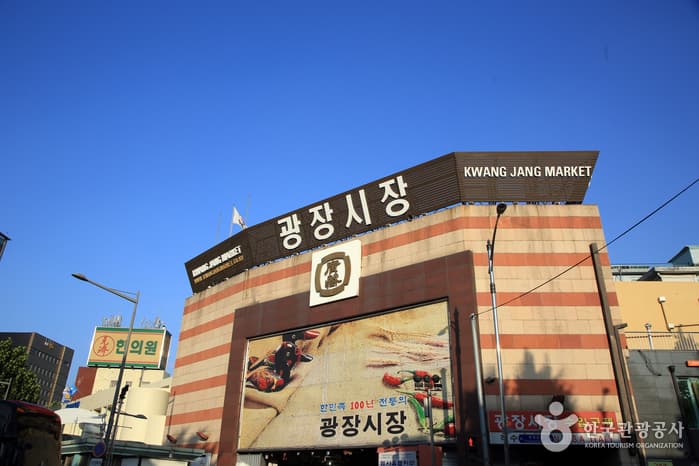
Gwangjang Market (광장시장) is a covered traditional market in Jongno-gu that dates back to 1905, making it one of Korea's oldest markets. It's really two markets in one: an upper level of fabric, hanbok, and secondhand clothing stalls, and the famous food alley (먹자골목), a dense row of open-front stalls where cooks fry, boil, and slice food a few feet from where you eat it.
This guide covers only the food side: what to order, what it costs, and how the ordering-and-paying process works when there's no printed English menu or single cash register. For where to stay or how to get around Seoul in general, see the neighborhood guide to Jongno and Insadong or the Seoul subway guide.
Getting there: Jongno 5-ga Station (Line 1), Exit 8, leads directly to the market. Euljiro 4-ga Station (Lines 2 and 5) Exit 4 also works. Since you'll likely be pulling up a map to find specific stalls, it's worth having data ready before you land — grab a Korea eSIM so Naver Map and translation apps work the moment you arrive.
Hours: Individual stalls set their own hours, but most food vendors run roughly from mid-morning until 10-11pm, seven days a week. The market closes for the Seollal and Chuseok holidays; it stays open on January 1. The upstairs fabric and clothing section keeps shorter hours and is typically quieter or closed on Sundays — the food alley is the part that stays busy every day.
What to eat: the stalls that matter
You won't be able to try everything, so prioritize these:
- Bindaetteok (빈대떡) — thick, crispy mung bean pancakes fried in shallow oil, often with pork and vegetables mixed in. This is the market's signature dish; you'll see rows of cooks flipping pancakes in giant pans. Well-known names include Sunhee's (원조순희네빈대떡), but several neighboring stalls sell nearly identical versions.
- Mayak gimbap (마약김밥) — literally "narcotic gimbap," small seaweed rice rolls with pickled radish and carrot (no meat or egg), dipped in a mustard-soy-vinegar sauce. Sold in bite-sized portions, meant to be addictive and cheap.
- Yukhoe (육회) — raw beef tartare mixed with sesame oil, sugar, garlic, and a raw egg yolk, usually topped with julienned Asian pear. Gwangjang is one of the most famous places in Seoul to eat it, with a cluster of dedicated yukhoe stalls (Jinju Yukhoe is one long-running name in that row). Order this at a stall that specializes in it, not a general food stand.
- Sundae (순대) — steamed Korean blood sausage, usually served with a side of liver and lung, plus a salt or sauce dip.
- Kalguksu / kongguksu — hand-cut noodle soup or chilled soy-milk noodle soup, a good non-fried option between fried dishes.
- Bugeokuk (dried pollack soup) — a mild, hangover-friendly soup sold at several stalls.
- Japchae and tteokbokki — stir-fried glass noodles and spicy rice cakes, sold by the plate as filler food between the bigger-ticket items.
Recently, some stalls in the market have also been pushing dessert items — mugwort-flavored choco pies and similar traditional-market twists on packaged sweets have shown up as photo-friendly souvenirs. Treat these as a bonus, not a meal replacement.
Prices at a glance
Prices vary stall to stall and change over time, so treat these as planning ranges, not fixed quotes — always check the price board or ask before ordering.
| Dish | Korean name | Typical price | Serves |
|---|---|---|---|
| Bindaetteok (mung bean pancake) | 빈대떡 | ~₩5,000-10,000 | 1-2 |
| Mayak gimbap (mini rolls) | 마약김밥 | ~₩3,000-5,000 | 1 |
| Yukhoe (raw beef tartare) | 육회 | ~₩20,000-30,000 | 2 |
| Sundae (blood sausage) | 순대 | ~₩5,000-8,000 | 1 |
| Kalguksu / kongguksu | 칼국수/콩국수 | ~₩8,000-10,000 | 1 |
| Tteokbokki / japchae | 떡볶이/잡채 | ~₩4,000-8,000 | 1 |
A realistic budget for two or three shared dishes plus a drink runs roughly ₩20,000-40,000 per person — cheaper if you stick to gimbap and pancakes, higher if yukhoe is involved.
How ordering and paying actually works
This is where Gwangjang trips up first-timers, because it doesn't work like a restaurant:
- Each stall is its own business. There's no shared menu or central register. You order and pay at the specific stall where you're sitting or standing.
- Menus are often Korean-only, hand-written, or just a photo board. Pointing at the dish (either on display or in a photo) is completely normal and expected — don't be shy about it.
- Confirm the price before you order, especially for yukhoe or larger seafood-style plates, where prices can vary by weight or size. Ask "얼마예요?" (eolmayeyo — "how much is it?") or check the posted price board. In 2024, viral videos of a few stalls overcharging tourists or serving smaller portions than requested drew public criticism in Korea, so this simple confirm-first habit is worth the extra ten seconds.
- Seating is shared and informal — plastic stools, communal counters, sometimes standing. You may sit shoulder-to-shoulder with strangers at the same stall.
- Cash is still king. Many stalls are cash-preferred and some are cash-only, though card acceptance has slowly expanded. Carry ₩50,000-100,000 in small bills for a market visit; see the guide to paying in Korea as a tourist for a broader breakdown of cards, cash, and apps.
- Ordering across multiple stalls is normal. A typical visit means buying one dish from stall A, another from stall B, and eating both at whichever stall has open seating — locals do this constantly.
Practical tips for timing and crowds
- Weekday late morning to early afternoon (around 11am-2pm) is calmer than evenings and weekends.
- Weekends are packed, especially with domestic tourists and now international visitors following viral mayak gimbap videos; expect to queue at the most famous stalls.
- Bring cash, wear clothes you don't mind smelling like fried food, and expect no air conditioning relief in the covered alley during summer.
- If you want a broader Jongno day that includes palaces and tea houses around the market, pair this stop with the Jongno and Insadong travel guide or slot it into a 3-day Seoul itinerary.
- If you'd rather have a reservation-style meal after the market crowds, see how to book restaurants in Korea — though note most Gwangjang stalls don't take reservations at all; it's walk-in only.
Where to stay nearby
Gwangjang Market sits between Jongno and Euljiro, within a short subway ride of most central Seoul areas. If you want to base yourself close to it, compare options in the best areas to stay in Seoul guide; Jongno and Myeongdong hotels both put you within 15-20 minutes by subway. You can also check Myeongdong hotel picks if you'd rather stay in a more tourist-facing base and treat Gwangjang as a half-day food trip.
FAQs
Gwangjang Market Food Guide: What to Eat and Prices
Contains affiliate links
Quick answers
Is Gwangjang Market cash-only?
Not entirely, but plan as if it is. Many stalls, especially the smaller food vendors, are cash-preferred or cash-only, while card acceptance has grown slowly at some. Carry ₩50,000-100,000 in small bills to avoid awkward moments, and keep a card as backup only.
What is mayak gimbap and why is it called 'narcotic'?
Mayak gimbap (마약김밥) means 'narcotic gimbap' as a nickname, not a literal drug reference — it describes small, simple seaweed rice rolls (usually just pickled radish and carrot) dipped in a mustard-soy sauce that people find addictively good. It's sold cheaply, around ₩3,000-5,000 per plate.
Is Gwangjang Market open on Sundays and holidays?
Most food stalls operate daily, including Sundays, but the upstairs fabric and clothing section keeps shorter or closed hours on Sundays. The market closes for the Seollal and Chuseok holidays; it's open on January 1 like a normal day.
Do I need to worry about overcharging at Gwangjang Market?
It's not the norm, but a handful of stalls have drawn criticism after viral videos showed tourists charged more or served smaller portions than expected. Confirm the price on the board or ask before ordering, and pay per stall rather than assuming a fixed market-wide price.
Things to Do
Hire a Personal Shopper in Seoul: Cost, Inclusions, Booking
Hiring a personal shopper in Seoul costs around ₩70,000-₩200,000 per hour. What's included, which district to pick, and how to book, explained.
Facts checked: 2026-09-13 · 6 min read
Running in Seoul: Riverside Routes, Run Clubs & Races
Running in Seoul made simple: Han River route distances and surfaces, how visitors join a local run club, and where to register for races during your trip.
Facts checked: 2026-09-11 · 6 min read
Noryangjin Fish Market Guide: Buy, Cook and Eat Fresh Seafood
Noryangjin Fish Market guide for tourists: how to pick live seafood downstairs, pay for cooking upstairs, and what the whole meal really costs.
Facts checked: 2026-09-07 · 5 min read
Latest guides
Incheon Airport Duty-Free Pre-Order: Pickup Counters & Rules
Learn how to pre-order Incheon Airport duty-free online, find the departure pickup counters, and see what purchase rules changed for tourists.
Facts checked: 2026-09-12 · 6 min read
Hair Color and Perm in Hongdae: What to Expect
Booking hair color and perm in Hongdae? Here's the appointment timeline, service order, pricing range, and how tourists reserve the combo.
Facts checked: 2026-09-10 · 5 min read
The Whoo Spa Myeongdong: How Tourists Book & What to Expect
Book The Whoo Spa in Myeongdong as a tourist: location near Exit 8, OTA reservation steps, treatment tiers and prices, and how it differs from a jjimjilbang.
Facts checked: 2026-09-09 · 6 min read
Face Contouring Massage in Seoul: Cost, Booking, What's Included
Face contouring massage in Seoul: real prices in won, what a session includes, and how tourists book online before visiting a Seongsu studio.
Facts checked: 2026-09-08 · 7 min read