Suwon Hwaseong Fortress Day Trip from Seoul: Tickets & Tips
Facts checked: 2026-08-017 min read
By Korea Visit Guide Editorial · Published · Updated
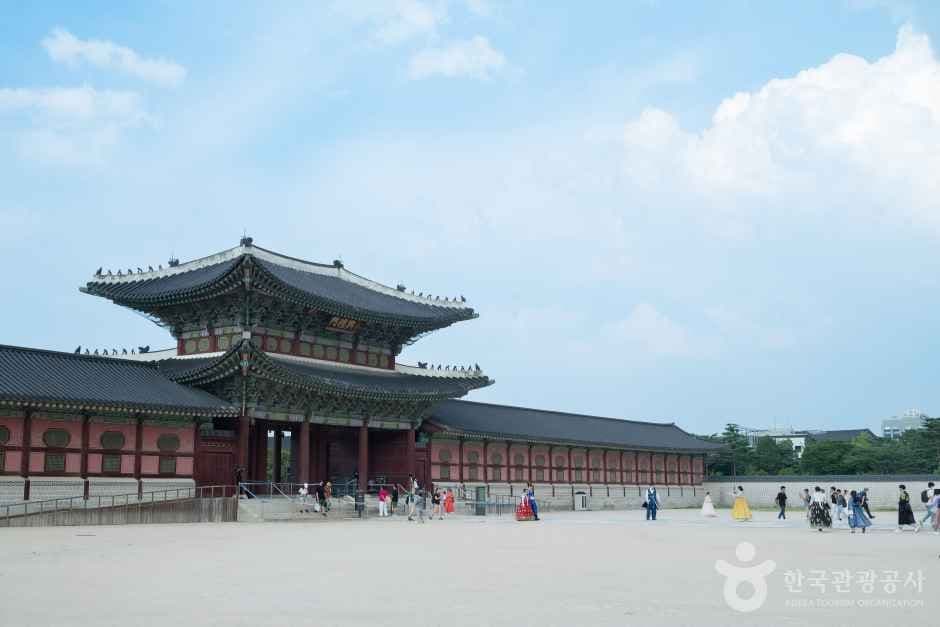
Suwon Hwaseong Fortress Day Trip from Seoul: Tickets & Tips
Contains affiliate links
Stay connected in Korea
Get a Korea travel eSIM before you land — data works the moment you arrive, no SIM swap.
Contains affiliate links
Quick Answer: Can You Do Suwon Hwaseong as a Day Trip from Seoul?
Yes. Suwon Hwaseong (수원화성) is one of the easiest UNESCO-listed sites to reach from Seoul — no tour bus required. Most travelers reach it by Seoul Subway Line 1, which runs directly from central Seoul to Suwon Station in about 55-75 minutes with no transfer; a faster regional or express train can cut that to roughly 30-45 minutes if the timing works out. Once there, the 5.7 km (3.5 mi) wall loop, Hwaseong Haenggung Palace, and the surrounding Suwon galbi restaurant strip can comfortably fill a half-day to full-day itinerary.
How to Get from Seoul to Suwon Hwaseong Fortress
Suwon sits on the same Seoul Subway Line 1 (dark blue) that runs through Seoul Station, City Hall, and Yongsan, so there's no need to switch to a separate regional line for the basic trip. If you're already comfortable with the subway system, see our Seoul subway guide for line basics before you head out.
| Option | Approx. travel time from central Seoul | Approx. fare | Notes |
|---|---|---|---|
| Subway Line 1 (all-stop) | 55-75 min from Seoul Station/City Hall | Standard T-money distance fare (roughly ₩2,000-2,700) | Direct, no transfer; slowest but cheapest and simplest |
| Regional/express train on the same corridor | 30-45 min from Seoul Station | Fare varies by train type; check the official rail site | Faster if a suitable departure lines up; fewer daily options than the all-stop subway |
| Taxi (door to door) | 45-60 min depending on traffic | Roughly ₩45,000-60,000 one-way | Best for groups of 3-4 splitting the cost |
Because the faster train option runs less frequently, first-timers without a fixed schedule usually just hop on Line 1 directly rather than timing a connection — it is the most predictable choice even though it's not the fastest. Load or top up a T-money card before you go — it works on the subway, city buses in Suwon, and taxis. Since you'll be checking bus numbers, train times, and maps on the move, it's worth grabbing a Korea eSIM before you land so you have data the moment you step off at Suwon Station.
Getting from Suwon Station to the Fortress
Hwaseong Fortress isn't right outside Suwon Station — it's about 3 km (2 miles) away, roughly a 10-15 minute ride. Several city buses run from the station area to Paldalmun (팔달문, the South Gate) and Janganmun (장안문, the North Gate), the two main entry points into the walled old town; check the bus stop signage or an app like Naver Map at the station for the current stop number and exit, since these details can shift. A taxi from the station takes about 10 minutes and is inexpensive enough to be worth it if you're short on time or traveling with kids.
Once you're inside the old town, the fortress area is walkable, and a hop-on tourist option — the Hwaseong-eocha (화성어차), a themed tram that circles part of the wall — lets you skip sections if you're short on energy or the weather is uncooperative. Reservations for the eocha can fill up on weekends, so check availability the day before if you want a guaranteed seat, and confirm current fares and schedules on the official site since these are adjusted periodically.
Suwon Hwaseong Walking Itinerary
The full wall loop is about 5.7 km and takes 2-3 hours at an easy pace with stops, or half that if you only walk the highlight sections. A practical half-day route:
- Paldalmun (팔달문) – South Gate, surrounded by Suwon's traditional market streets. Good starting point if you arrive by bus from the station.
- Hwaseong Haenggung (화성행궁) – Jeongjo's temporary palace, the largest surviving Joseon-era detached palace and the visual centerpiece of the fortress complex.
- Seojangdae (서장대) – the West command post, on the highest point of the wall, with panoramic views over Suwon.
- Janganmun (장안문) – the North Gate, one of the most photographed structures on the wall.
- Hwahongmun (화홍문) and Banghwasuryujeong (방화수류정) – a water gate and pavilion combination over a stream, arguably the prettiest stretch of the entire fortress and a popular spot to sit and cool off in the shade.
- Changnyongmun (창룡문) – East Gate, before looping back toward Paldalmun.
If you're traveling with young kids or visiting in peak summer heat, consider cutting the loop short after Banghwasuryujeong and backtracking rather than pushing for the full circuit — shade is limited along several wall sections. Summer in the Seoul-Gyeonggi area can bring heat advisories and high humidity, so an early morning or early evening start is generally more comfortable in that season; see our summer in Korea guide for general heat-season planning.
Tickets, Hours, and Night Opening
Hwaseong Fortress and Hwaseong Haenggung Palace are ticketed separately, and both are inexpensive by international standards — typically a few thousand won per adult, with discounts for youth, children, and Suwon residents. Because admission structures and hours are updated periodically (and the palace runs seasonal night openings), confirm current prices, hours, and any combined-ticket options on the official Suwon Cultural Heritage or Hwaseong Haenggung site before you go rather than relying on older blog posts.
A few practical notes:
- The wall itself is open-air and free to walk in most stretches; ticket booths control access to specific gate towers, command posts, and the Haenggung Palace grounds.
- Hwaseong Haenggung occasionally runs an evening opening (야간개장) with the walls and pavilions lit up — worth timing your visit around if you don't mind coming back after dinner, though schedules vary by season, so check ahead.
- If you're navigating on your phone, Naver Map handles the fortress paths and bus routes far better than Google Maps in Korea.
Where to Eat Suwon Galbi Near the Fortress
Suwon is the birthplace of Suwon galbi (수원왕갈비), thick-cut, bone-in beef short ribs seasoned and grilled at the table — distinct from the thinner marinated galbi found elsewhere in Korea. The dish developed near the old cattle market outside Paldalmun, and a cluster of long-running galbi restaurants still operates in that same area, an easy walk or short taxi ride from the fortress gates.
Look for restaurants with "왕갈비" (king galbi) in the name near Paldalmun and along the galbi restaurant street — portions are large and usually priced for sharing, so going as a pair or group keeps the per-person cost reasonable. If you haven't grilled Korean barbecue before, our Korean BBQ guide for foreigners covers ordering, cuts, and table etiquette that applies here too. Beyond galbi, the market streets around Paldalmun and Nammun also have street food stalls for a quicker, cheaper bite between fortress sections.
Practical Tips for Your Suwon Day Trip
- Best time of day: early morning or after 4 p.m. in summer to avoid the worst heat; overcast or cooler months make the full wall loop far more comfortable.
- Shoes: the wall path includes stone steps and uneven sections — wear real walking shoes, not sandals.
- Combine or split: Suwon pairs poorly with other big day trips in a single day given the walking involved; treat it as its own dedicated day rather than bolting it onto a packed Seoul itinerary. If you're mapping out your whole trip, our 5-Day Seoul itinerary shows where a day like this fits around city-based days.
- Coming back late: subway Line 1 and regional trains back to Seoul run until roughly midnight, but confirm the last departure time from Suwon Station before you commit to a night opening.
- Staying over instead: if you'd rather split Suwon across two relaxed mornings instead of one long day, it's easier to just book a Seoul hotel centrally located near a Line 1 station and do Suwon as a slower half-day.
Suwon Hwaseong Fortress Day Trip from Seoul: Tickets & Tips
Contains affiliate links
Quick answers
How do I get to Suwon Hwaseong Fortress from Seoul without a car?
Take Seoul Subway Line 1 directly to Suwon Station (about 55-75 minutes from Seoul Station/City Hall, no transfer), or a faster regional/express train on the same corridor if the schedule lines up (roughly 30-45 minutes). From Suwon Station, a short city bus or 10-minute taxi ride gets you to the fortress gates at Paldalmun or Janganmun.
How long does it take to walk the entire Hwaseong Fortress wall?
The full loop is about 5.7 km (3.5 miles) and takes roughly 2-3 hours at a relaxed pace with stops at the gates and pavilions. Many day-trippers walk only the highlight half — Paldalmun to Hwahongmun and Banghwasuryujeong — which takes 1-1.5 hours instead.
Is Suwon Hwaseong worth a day trip from Seoul?
Yes, especially for anyone interested in Joseon-era history or architecture — it's a well-preserved 18th-century fortress with an intact palace, distinct from the palaces inside Seoul. It also pairs naturally with a Suwon galbi meal, giving the day trip both a sightseeing and food payoff.
What is Suwon galbi and where should I eat it near the fortress?
Suwon galbi is the city's signature thick-cut, bone-in grilled beef short rib, historically tied to the old cattle market near Paldalmun. Several long-running galbi restaurants cluster around Paldalmun, a short walk or taxi ride from the fortress, and are the most convenient option after a wall walk.
Itineraries
Seoraksan Day Trip from Seoul: Bus, Tours & Cable Car Timing
How to visit Seoraksan National Park from Seoul in a day: express bus times, guided tour options, cable car tickets, and a realistic hour-by-hour plan.
Facts checked: 2026-09-14 · 7 min read
Seoul with Kids: Family Itinerary & Activities Guide
Seoul with kids made easy: a paced 3-day itinerary, age-by-age activity picks, stroller and subway logistics, and rainy-day backups for families.
Facts checked: 2026-08-08 · 7 min read
Jeju 3-Day Itinerary: East vs West Route Compared
Planning a Jeju 3-day itinerary? Compare the east route (Seongsan, Udo, Hamdeok) vs west route (Hallim, Aewol, Sanbangsan) with drive times and day plans.
Facts checked: 2026-08-05 · 7 min read
Latest guides
Hire a Personal Shopper in Seoul: Cost, Inclusions, Booking
Hiring a personal shopper in Seoul costs around ₩70,000-₩200,000 per hour. What's included, which district to pick, and how to book, explained.
Facts checked: 2026-09-13 · 6 min read
Incheon Airport Duty-Free Pre-Order: Pickup Counters & Rules
Learn how to pre-order Incheon Airport duty-free online, find the departure pickup counters, and see what purchase rules changed for tourists.
Facts checked: 2026-09-12 · 6 min read
Running in Seoul: Riverside Routes, Run Clubs & Races
Running in Seoul made simple: Han River route distances and surfaces, how visitors join a local run club, and where to register for races during your trip.
Facts checked: 2026-09-11 · 6 min read
Hair Color and Perm in Hongdae: What to Expect
Booking hair color and perm in Hongdae? Here's the appointment timeline, service order, pricing range, and how tourists reserve the combo.
Facts checked: 2026-09-10 · 5 min read