Seoul with Kids: Family Itinerary & Activities Guide
Facts checked: 2026-08-087 min read
By Korea Visit Guide Editorial · Published · Updated
Seoul with Kids: Family Itinerary & Activities Guide
Contains affiliate links
Stay connected in Korea
Get a Korea travel eSIM before you land — data works the moment you arrive, no SIM swap.
Contains affiliate links
Seoul is genuinely easy with kids — flat sidewalks, elevators in most subway stations, nursing rooms in every mall, and convenience stores stocked with diapers and formula on nearly every block. The trick isn't finding things to do; it's pacing the day so nobody melts down at 4pm. This itinerary is built around kids' schedules first and sightseeing second.
How to Pace a Family Day in Seoul
Skip the generic first-timer itinerary logic of stacking three neighborhoods into one day. With kids, plan around:
- One major activity per half-day. A palace, a museum, or a theme park zone — not two or three.
- A rest block from about 1-3pm. Hotel nap, kids' cafe, or a slow lunch. Seoul's heat and humidity in summer (and the crowds year-round) hit hardest in early afternoon.
- Early starts, early finishes. Arrive at palaces or zoos at opening to beat both crowds and heat, and aim to be back at the hotel by 6:30-7pm before dinner-hour meltdowns.
- Buffer transit time. Even short subway hops take longer with a stroller, elevators, and snack breaks — assume 1.5x the time Naver Map estimates.
If you haven't set up connectivity yet, get a Korea eSIM before you land so Naver Map, translation apps, and ride-hailing work the moment you're chasing a toddler through Incheon Airport.
Day 1: Palace Morning + Water Play Evening
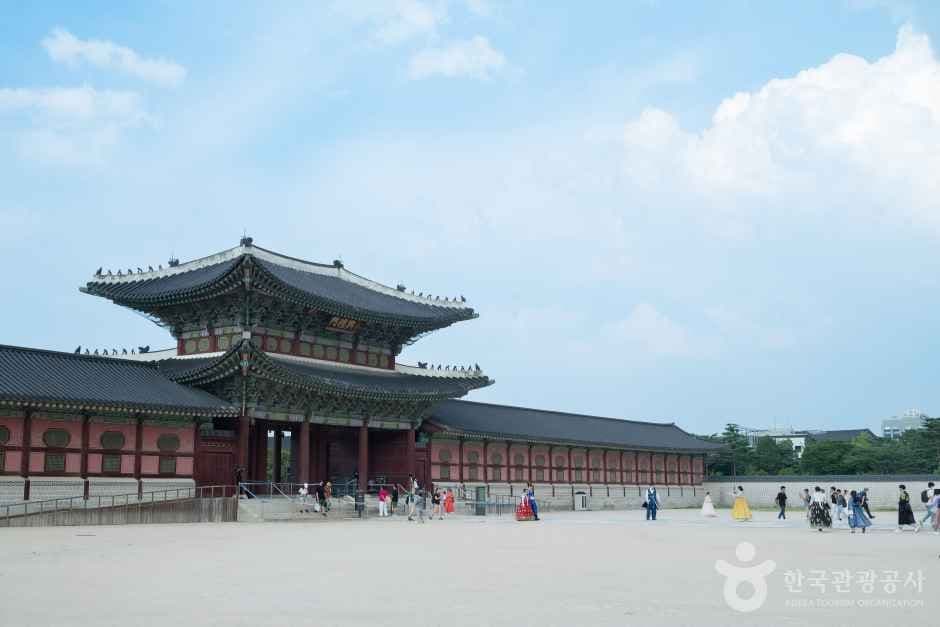
Morning (9:30am-12pm): Gyeongbokgung Palace (경복궁) at opening. The grounds are flat and wide, strollers roll fine on the main courtyards, and most palaces keep a small number of free strollers and wheelchairs at the ticket booth on a first-come basis. Skip the full walking tour — see the throne hall, one inner courtyard, and the National Folk Museum of Korea inside the palace grounds, which has hands-on, kid-scaled exhibits and is far less overwhelming than a full history museum. Full ticket and guard-ceremony details are in our Gyeongbokgung Palace guide.
Midday: Lunch nearby, then head back to the hotel for a nap or quiet hotel-room downtime. Don't schedule anything until 3-4pm.
Late afternoon/evening: Cheonggyecheon Stream (청계천), a sunken walking path through downtown with shallow water, stepping stones, and — during peak summer weeks — temporary splash zones and wading events near the Gwanghwamun end. These pop-up water play areas run seasonally, so check Seoul city's tourism site for current dates before you go. It's free, shaded in parts, and low-key enough for toddlers to wander.
Day 2: Theme Park Day (Pick One, Don't Combine)
This is the day families burn out by trying to do both a theme park and a palace. Pick one park and commit.
- Lotte World (Jamsil): Better for families with kids under 7, or if rain/heat is a risk — half the park (Lotte World Adventure) is indoor, it's a direct subway ride, and Lotte World Aquarium is attached for a slower-paced add-on. Stroller rental is available on site.
- Everland (Yongin): Better for kids 6+ who want bigger rides and the Zootopia safari zone, but it's roughly 60-90 minutes from central Seoul and effectively takes the full day once you count transit.
For ticket prices, discounts, and which park suits your group, our Lotte World vs Everland comparison breaks down the savings options in detail — worth checking before you buy, since online combo tickets are usually cheaper than gate prices.
If you chose Lotte World, cap the evening with a slow walk around Seokchon Lake next door instead of squeezing in another attraction.
Day 3: Han River Morning + Rainy-Day Backup
Morning: Seoul Forest (서울숲) for the free-roaming deer feeding area, followed by the Han River bank at Ttukseom — rent a family-size bike or just picnic on the grass. Convenience stores at the riverside park sell cheap snacks and drinks, and there's plenty of shade. Full picnic, bike rental, and cruise details are in our Han River guide.
Afternoon (heat or rain backup): The War Memorial of Korea has free general admission, cavernous air-conditioned halls, and an outdoor aircraft/tank yard kids tend to love. The National Museum of Korea is also free for general galleries and runs a dedicated Children's Museum, though that section usually needs a same-day or advance reservation through the museum's website — check availability before you go. Both are solid fallbacks if the forecast turns bad; our Rainy Day in Seoul guide has more indoor options if the whole trip gets soaked.
Lower-key alternative: Seoul Children's Grand Park (서울어린이대공원) in Gwangjin-gu combines a free zoo, botanical garden, and small amusement rides (paid per-ride) in one walkable park — a gentler option than a full theme park day if your kids are younger or you're jet-lagged.
Best Seoul Attractions by Age Group
| Attraction | Best age | Indoor/Outdoor | Stroller-friendly | Notes |
|---|---|---|---|---|
| Lotte World Adventure + Aquarium | 3-10 | Mostly indoor | Yes, rentals on site | Rain-proof, direct subway (Jamsil Station) |
| Everland Zootopia + rides | 6-14 | Mostly outdoor | Partial | 60-90 min from Seoul; height limits on big rides |
| Seoul Children's Grand Park | 1-10 | Outdoor | Yes | Free zoo/garden entry; rides charged separately |
| War Memorial of Korea | 5+ | Indoor + outdoor yard | Yes | Free admission, air-conditioned |
| National Museum of Korea (Children's Museum) | 4-10 | Indoor | Yes | Reserve the kids' section ahead |
| Seoul Forest deer feeding | 1-8 | Outdoor | Yes | Free, best in morning |
| Han River parks | All ages | Outdoor | Yes | Picnic, bikes, playgrounds |
| COEX Aquarium / Kidzania (Konkuk) | 4-12 | Indoor | Yes | Good rainy-day or mall-adjacent option |
Stroller, Subway, and Kid Logistics
- Subway elevators: Most Seoul subway stations now have street-to-platform elevators, but not every exit does. Use Naver Map's transit routing (see our Naver Map guide) which flags elevator-accessible exits, or the Seoul Subway app.
- Subway/bus fares for kids: Children under about 6 generally ride free; elementary-age kids get a discounted fare, but only if they tag a registered child T-money card — an adult card will charge full adult fare regardless of the rider's age. See our T-money card guide for how to set one up.
- Taxis and car seats: Korean taxis are not required to carry child car seats, and most don't. If you're traveling with an infant or toddler, bring a compact travel car seat or inflatable booster, or use Kakao T's larger "Blue"/van options which have more space to install one. See our Kakao T guide for booking.
- Nursing rooms and diaper changes: Nearly every department store, mall, and larger subway station has a marked nursing room (수유실), findable on Naver Map by searching the Korean term.
- Kids' cafes: Indoor play cafes (키즈카페) are everywhere and useful for jet lag resets or bad-weather afternoons — pay an hourly fee per child, usually with a drink for the accompanying adult included.
Where to Stay with Kids
A family base near a direct subway line matters more than being in the trendiest neighborhood. Areas like Jamsil (near Lotte World), or central hubs covered in our best areas to stay in Seoul guide, tend to work well for families because of short transfers and elevator access. If you'd rather lock in a family room now, you can browse Seoul hotels with family-size rooms before availability tightens around school holidays.
Booking Ahead: What to Reserve
Theme park tickets, aquarium slots, and museum children's sections in Seoul often sell out or run capped time slots, especially on weekends and school holidays. Book theme park and activity tickets in advance rather than buying at the gate — it usually saves both money and a long line with tired kids.
Seoul with Kids: Family Itinerary & Activities Guide
Contains affiliate links
Quick answers
Is Seoul stroller-friendly?
Mostly yes. Sidewalks are wide and flat in central areas, most subway stations have elevators (though not every exit), and malls, palaces, and parks are stroller-accessible. Older neighborhoods with narrow alleys (like some hanok village lanes) are harder going, so consider a lightweight umbrella stroller for those stops.
What's the best area to base a family trip in Seoul?
Pick a neighborhood on a direct subway line with minimal transfers to your main planned activities — Jamsil works well if theme parks are a priority, while a central, well-connected area suits a mixed itinerary. See our best areas to stay in Seoul guide for a full comparison.
Do kids ride the Seoul subway for free?
Children under about 6 generally ride free, and elementary-age kids get a discounted fare, but only when tagging a registered child T-money card rather than a standard adult card, which charges full fare regardless of the rider's age.
Lotte World or Everland for a family with young kids?
Lotte World suits families with kids under about 7 or trips with uncertain weather, since half the park is indoor and it's a direct subway ride. Everland suits kids 6 and up who want bigger rides and the Zootopia safari zone, but requires a 60-90 minute trip each way.
Itineraries
Seoraksan Day Trip from Seoul: Bus, Tours & Cable Car Timing
How to visit Seoraksan National Park from Seoul in a day: express bus times, guided tour options, cable car tickets, and a realistic hour-by-hour plan.
Facts checked: 2026-09-14 · 7 min read
Jeju 3-Day Itinerary: East vs West Route Compared
Planning a Jeju 3-day itinerary? Compare the east route (Seongsan, Udo, Hamdeok) vs west route (Hallim, Aewol, Sanbangsan) with drive times and day plans.
Facts checked: 2026-08-05 · 7 min read
Suwon Hwaseong Fortress Day Trip from Seoul: Tickets & Tips
Plan a Suwon Hwaseong Fortress day trip from Seoul: subway and train routes, a walking itinerary, ticket prices, and where to eat Suwon galbi.
Facts checked: 2026-08-01 · 7 min read
Latest guides
Seoul Hotel Price Surges: How to Avoid Overpaying
Seoul hotel prices can double during concerts and festivals. Learn how to spot event-driven surges early and book around them.
Facts checked: 2026-09-21 · 6 min read
Korea Customs Duty-Free Allowance: What You Can Bring In
Korea customs duty-free allowance for tourists: alcohol, cigarette and cash limits, prohibited items, and how to declare on arrival.
Facts checked: 2026-09-20 · 6 min read
Private Women-Only Bathhouse Rooms in Korea: Booking Guide
How to book a private women-only bathhouse room in Korea instead of a shared jjimjilbang: pricing, what's included, and reservation steps.
Facts checked: 2026-09-19 · 7 min read
Catch Table Deposit & Cancellation Policy: Will You Get Refunded?
Catch Table deposit and cancellation rules explained: how much restaurants can hold, the cancellation deadline, and how refunds post to foreign cards.
Facts checked: 2026-09-18 · 6 min read